

Tower Fire delivers professionally developed fire strategies that support Building Control approval, meet Regulation 38 requirements, and provide responsible persons with the fire safety information needed to manage buildings safely and compliantly.
Fire Strategies: Building Regulations Compliance and Occupant
A Fire Strategy is a key document that demonstrates compliance with Building Regulations and sets out the fire safety measures incorporated within a building. It provides the framework for discussions with Building Control and other Approval Authorities, supporting the approval process for new developments, extensions, and major refurbishments.
Tower Fire’s Fire Strategies are developed in accordance with current legislation and guidance, including Regulation 38 of the Building Regulations for England and Wales. They provide the fire safety information required by the Responsible Person at project completion or when a building is first occupied, helping to ensure ongoing fire safety compliance, effective management, and occupant protection.

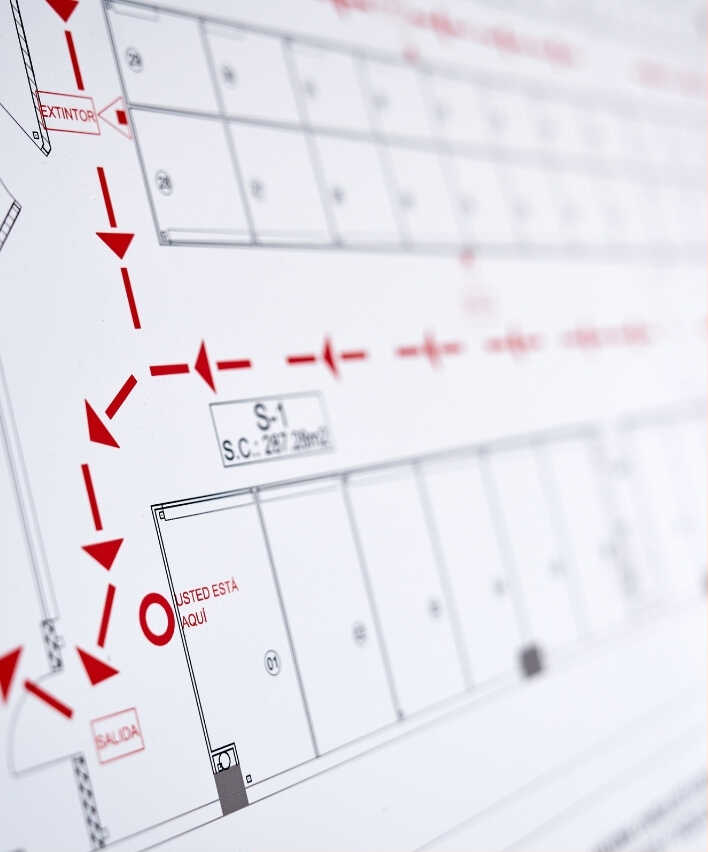
What Is a Fire Strategy?
A fire strategy is a technical document that defines the overall approach to fire safety for a specific building. It explains how the design, construction, and management of the building work together to protect occupants, enable safe evacuation, and allow the fire service to intervene effectively.
It is distinct from a fire risk assessment. A fire risk assessment is an operational document that identifies hazards in a building currently in use. A fire safety strategy is concerned with the design intent of the building: how it is compartmented, how occupants will escape, what detection and suppression systems are required, and how all these elements function together as a system.
For complex or high-risk buildings, a building fire strategy may go beyond standard prescriptive compliance and take a performance-based approach, using fire engineering analysis to demonstrate an equivalent or higher standard of safety.
What Does a Fire Strategy Cover?
A well-produced fire safety strategy covers the full scope of fire safety design for the building. Tower Fire ’s strategies typically include:
Building description:
layout, construction type, occupancy, and intended use
Fire hazard and risk profile specific to the building type and its occupants
Means of escape: travel distances, exit widths, protected routes, and refuge areas
Fire detection and alarm strategy, including system category and coverage
Compartmentation and passive fire protection measures
Active fire suppression and detection systems where required
Evacuation strategy: simultaneous, phased, or progressive horizontal as appropriate
Management and maintenance responsibilities for ongoing compliance
When Is a Fire Strategy Required?
A fire strategy UK building control bodies and architects are most familiar with is typically submitted alongside a building regulations application. It must demonstrate compliance with Approved Document B or an agreed alternative approach.
A fire strategy is required for:
- New build residential, commercial, and mixed-use developments
- Major refurbishments involving changes to layout, occupancy, or fire protection systems
- Change of use applications where the original fire safety design no longer applies
- High-rise residential buildings subject to the Fire Safety (England) Regulations 2022
- Complex buildings such as care homes, hospitals, schools, and hotels with bespoke evacuation requirements
- Existing buildings where the responsible person’s fire risk assessment recommends a strategic review

Why Choose Tower Fire
Our fire strategies are written by active and retired professional firefighters with real-world knowledge of fire behaviour in buildings. That experience gives our work a credibility and depth that a purely academic approach cannot match.back to you as soon as possible!