
Tower Fire carries out comprehensive fire compartmentation surveys to identify breaches, defects, and areas of non-compliance within fire-resisting walls, floors, ceiling voids, risers, and service penetrations. Our detailed surveys help building owners, landlords, housing providers, and Responsible Persons maintain effective compartmentation, support fire safety compliance, and protect occupants from the spread of fire and smoke.
Fire Compartmentation Survey: Protecting Life, Limiting Fire Spread & Supporting Compliance
Tower Fire delivers comprehensive fire compartmentation surveys for commercial, residential, healthcare, education, and mixed-use buildings across the UK. Our surveys identify breaches, defects, and weaknesses within fire-resisting walls, floors, ceilings, risers, service penetrations, and other passive fire protection measures that could allow fire and smoke to spread beyond the area of origin.
Effective fire compartmentation is one of the most important fire safety measures within any building. Under the Regulatory Reform (Fire Safety) Order 2005 and Approved Document B, Responsible Persons and building owners must ensure that fire protection measures are properly maintained and remain effective throughout the life of the building. A professional fire compartmentation survey provides a clear assessment of compartment integrity, helping to identify defects, maintain compliance, protect escape routes, and safeguard occupants, property, and business continuity.

What Is a Fire Compartmentation Survey?
A fire compartmentation survey is a detailed inspection of a building’s passive fire protection measures, carried out to assess whether fire-resisting walls, floors, ceilings, risers, service penetrations, cavity barriers, and other compartmentation features remain intact and capable of preventing the spread of fire and smoke. Effective compartmentation is designed to contain fire within the area of origin, protect escape routes, and provide occupants with valuable time to evacuate safely while supporting emergency service intervention.
A fire compartmentation survey is different from a fire risk assessment. While a fire risk assessment evaluates the overall fire safety arrangements and management of a building, a compartmentation survey focuses specifically on the physical integrity of the building’s passive fire protection. The survey identifies breaches, damaged fire-resisting construction, inadequate fire stopping, and other defects that could compromise compartment performance and increase the risk of fire and smoke spread.
Common Defects Identified During Compartmentation Surveys
Fire compartmentation defects are among the most common issues identified during passive fire protection surveys. Over time, building alterations, maintenance works, new service installations, and general wear can compromise the integrity of fire-resisting walls, floors, ceilings, fire doors, and fire stopping systems. Even minor breaches can allow fire and smoke to spread beyond the compartment of origin, increasing risk to occupants, property, and business continuity.
The most common compartmentation defects identified during our fire compartmentation surveys include:
- Unsealed Service Penetrations – Openings created for cables, pipes, ductwork, and containment systems that have not been correctly fire stopped following installation or maintenance works.
- Defective Fire Doors – Damaged fire doors, missing intumescent seals, excessive gaps, unsuitable ironmongery, or doors that no longer achieve their intended fire resistance.
- Compromised Fire-Resisting Construction – Walls, floors, and ceilings that have been altered during refurbishment or building works without appropriate fire stopping or reinstatement.
- Deteriorated Fire Stopping Systems – Fire stopping materials that have become damaged, displaced, or ineffective due to age, movement, vibration, or subsequent works.
- Missing or Inadequate Cavity Barriers – Deficiencies within roof voids, ceiling voids, floor voids, and concealed spaces that can allow fire and smoke to spread undetected throughout a building.
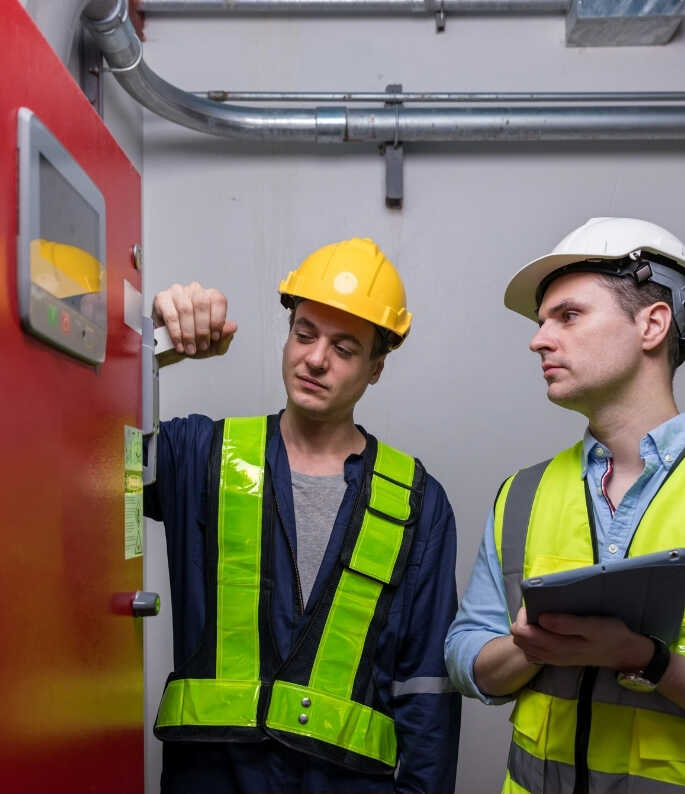
Tower Fire’s fire compartmentation surveys and fire stopping inspections go beyond visible areas. Our surveyors inspect risers, ceiling voids, roof spaces, service cupboards, duct routes, and other concealed locations where compartmentation defects are commonly found. Every survey includes a detailed report with photographic evidence, risk-prioritised recommendations, and practical remedial guidance to help Responsible Persons maintain fire safety compliance, protect escape routes, and preserve the integrity of their passive fire protection systems.
Fire Compartmentation Surveys for Compliance, Building Safety & Risk Management
Effective fire compartmentation is a critical part of any building’s fire safety strategy, helping to restrict the spread of fire and smoke, protect escape routes, and provide occupants with valuable time to evacuate safely. A fire compartmentation survey assesses the integrity of fire-resisting walls, floors, fire doors, cavity barriers, and fire stopping systems, identifying defects that could compromise the performance of your building’s passive fire protection.
Under the Regulatory Reform (Fire Safety) Order 2005, Building Regulations Approved Document B, and, where applicable, the Building Safety Act 2022, Responsible Persons and building owners have a duty to ensure fire protection measures remain effective and properly maintained. A professional fire compartmentation survey helps identify hidden defects, prioritise remedial works, demonstrate compliance, and provide confidence that your building’s compartmentation strategy is performing as intended.

Why Choose Tower Fire for Fire Compartmentation Surveys?
Choosing the right provider for a fire compartmentation survey is critical. Identifying hidden defects requires more than a visual inspection; it demands a thorough understanding of fire behaviour, building construction, passive fire protection systems, and the ways fire and smoke can spread throughout a building.Tower Fire combines operational fire service experience with specialist passive fire protection knowledge to deliver detailed compartmentation surveys that help building owners, Responsible Persons, housing providers, and property managers identify defects, prioritise remedial works, and demonstrate compliance with confidence.
back to you as soon as possible!