
Fire Extinguisher Training: Practical,
Hands-On Fire Safety Training

Home » Extinguisher Training

Tower Fire provides professional Fire Extinguisher Training and live-fire practical exercises for businesses, schools, care homes, healthcare providers, and organisations across the UK. Delivered by experienced former firefighters, our training gives staff the confidence and competence to identify fire risks, select the correct extinguisher, and take safe, effective action during the critical early stages of a fire.

Practical, engaging, and tailored to your workplace, our courses help organisations improve fire safety awareness, strengthen emergency preparedness, and support compliance with the Regulatory Reform (Fire Safety) Order 2005.

Speak to an expert

Fire Extinguisher Training: Practical, Hands-On Training Delivered by Fire Service Professionals

Tower Fire delivers professional Fire Extinguisher Training for businesses, schools, care homes, healthcare providers, and organisations across the UK. Delivered on-site by experienced former fire service professionals, our training combines fire safety theory with practical extinguisher use, helping staff understand how to identify fire risks, select the correct extinguisher, and respond safely and effectively during the early stages of a fire.

Having fire extinguishers on site is only part of the solution. Staff must know when it is safe to use them, which extinguisher is appropriate for the type of fire, and how to operate the equipment correctly under pressure. Using the wrong extinguisher can increase the risk to people and property, while hesitation can allow a small, manageable fire to escalate. Through realistic demonstrations and practical exercises, Tower Fire gives delegates the confidence, competence, and decision-making skills needed to respond appropriately in an emergency while supporting workplace fire safety compliance.
Fire Extinguisher Training Practical, Hands-On Training Delivered by Fire Service Professionals
Why Fire Extinguisher Training Matters

Why Fire Extinguisher Training Matters

Fire extinguisher training helps staff understand when it is safe to tackle a small fire, which extinguisher to use, and when to evacuate instead. Under the Regulatory Reform (Fire Safety) Order 2005, Responsible Persons must ensure employees receive adequate fire safety training, including instruction on firefighting equipment where extinguishers are provided.

Regular fire extinguisher training supports compliance with fire safety legislation and aligns with BS 5306 guidance for portable fire extinguishers. Tower Fire delivers practical, documented training sessions that improve staff confidence, support safe emergency response, and provide records for your fire safety logbook.

Fire Classes and Choosing the Correct Fire Extinguisher

Understanding fire classes and selecting the correct extinguisher is one of the most important elements of effective fire safety training. Using the wrong extinguisher can intensify a fire, create additional hazards, or place the user at serious risk. Tower Fire’s practical fire extinguisher training helps delegates identify different fire classes, understand the limitations of each extinguisher type, and make safe decisions during the early stages of a fire emergency.

The fire classes recognised in the UK include:
Class A – Fires involving combustible materials such as wood, paper, cardboard, textiles, and furnishings. Typically tackled using water, foam, water mist, or certain dry powder extinguishers.
Class B – Fires involving flammable liquids such as petrol, diesel, solvents, paints, and oils. Foam, CO₂, and dry powder extinguishers may be suitable depending on the specific risk.
Class C – Fires involving flammable gases such as propane, butane, and methane. Dry powder extinguishers are generally the preferred extinguishing agent.
Class D – Fires involving combustible metals such as magnesium, aluminium, titanium, and lithium. These require specialist Class D extinguishers and should never be tackled with standard firefighting equipment.
Electrical Fires – Fires involving live electrical equipment. CO₂ extinguishers are commonly used as they leave no residue and do not damage sensitive equipment.
Class F – Fires involving cooking oils and fats, typically found in commercial kitchens. Wet chemical extinguishers are specifically designed to tackle these high-temperature fires safely and effectively.

As lithium-ion batteries become increasingly common in workplaces, warehouses, educational settings, healthcare environments, and electric vehicle charging areas, Tower Fire can also provide guidance on battery fire risks, emerging Class L classifications, and appropriate emergency response procedures. Through practical demonstrations and hands-on training, delegates learn not only which extinguisher to use, but when it is safe to intervene and when evacuation is the safest and most appropriate course of action.

Where lithium-ion battery fires are a relevant risk on the premises, Tower Fire’s training will also cover the new Class L classification introduced under BS ISO 3941:2026 and the appropriate response.

What Our Fire Extinguisher Training Covers

Tower Fire’s practical fire extinguisher training is delivered on-site and tailored to the specific fire risks, occupancy, and extinguisher types installed within your premises. Designed to support fire safety compliance and improve emergency preparedness, our courses combine classroom learning with practical exercises to ensure delegates understand not only how to use an extinguisher, but when it is safe and appropriate to do so.

Every course covers:

Fire Classes & Extinguisher Selection:
Understanding Class A, B, C, D, Electrical, and Class F fires, and selecting the correct extinguisher for each risk.
Fire Extinguisher Identification:
Recognising water, foam, CO₂, powder, wet chemical, water mist, and specialist extinguishers through colour coding, labelling, and fire class markings.
Safe Fire Extinguisher Operation:
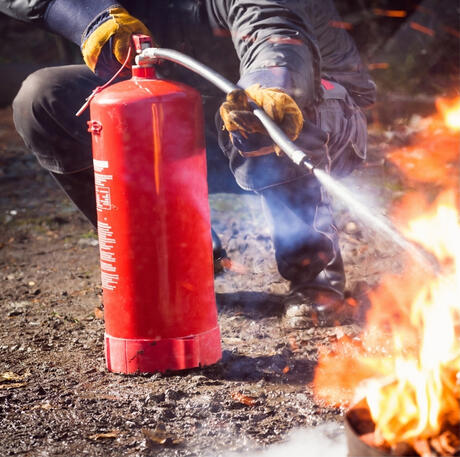
Practical instruction in the PASS technique (Pull, Aim, Squeeze, Sweep) and the safe deployment of extinguishers in an emergency.
When to Fight a Fire and When to Evacuate:
Understanding the limitations of portable firefighting equipment and recognising when immediate evacuation is the safest option.
Practical Fire Extinguisher Exercises:
Hands-on extinguisher use and live fire demonstrations where site conditions allow, helping delegates build confidence through practical experience.
Post-Incident Procedures:
Understanding what happens after extinguisher use, including reporting requirements, replacement, recharging, and maintaining compliance.

Practical Fire Extinguisher Training That Builds Real Confidence

Many fire extinguisher courses focus on theory alone. Tower Fire takes a more practical approach. Where safe and appropriate, delegates have the opportunity to participate in hands-on exercises and supervised extinguisher use, giving them first-hand experience of how extinguishers perform and how quickly fire conditions can develop.

Every training session is delivered by experienced former fire service professionals who have responded to real fire incidents and used firefighting equipment in operational environments. This practical knowledge helps transform fire safety training from a compliance exercise into a valuable learning experience that improves confidence, competence, and emergency decision-making.

Legal Requirements for Fire Extinguisher Training

The Regulatory Reform (Fire Safety) Order 2005 requires Responsible Persons to provide appropriate firefighting equipment and ensure employees receive adequate fire safety training. Where fire extinguishers are provided, staff should understand their purpose, limitations, and safe use. Guidance contained within BS 5306 also recommends regular instruction and refresher training to maintain competence and awareness.

Providing documented fire extinguisher training helps organisations demonstrate compliance, improve workplace safety, and ensure employees are better prepared to respond appropriately in the early stages of a fire emergency.

Who Needs Fire Extinguisher Training?

Fire extinguisher training is recommended for any organisation that provides portable firefighting equipment, including commercial businesses, schools, healthcare providers, care homes, housing organisations, industrial facilities, and public sector premises.

Training is particularly valuable for:

All staff, as part of general fire safety induction training and annual refreshers
Fire Wardens and Fire Marshals with emergency response responsibilities
Organisations introducing new extinguisher types or changing workplace risks
Businesses seeking to improve fire safety awareness and emergency preparedness
Premises where staff have not received practical extinguisher training within the last 12 months

By ensuring staff understand how to identify risks, select the correct extinguisher, and respond safely in an emergency, organisations can improve fire safety compliance, reduce risk, and create a more confident and prepared workforce.

FIRE SAFETY FAQ
Still have questions? Send us an email and we’ll get
back to you as soon as possible!

Send Email

FIRE SAFETY FAQ

Yes. RRFSO 2005 Article 13 requires appropriate firefighting equipment to be provided, and Article 21 requires staff to be trained in its use. BS 5306-3 recommends at least annual instruction. Training must be documented in the fire safety logbook.

BS 5306-3 recommends at least annually. Additional training is required following changes to premises, new extinguisher types being installed, or significant changes to personnel.

The fire classes relevant to your premises depend on the risks identified in your fire risk assessment. Tower Fire will assess the extinguishers installed and the risks present before tailoring the training to your specific building and operations.

Yes. All our fire extinguisher training is delivered on-site, using the extinguisher types installed in your building. We bring the training materials and conduct practical exercises at your premises.